



As the demand for sustainable energy solutions grows, it is crucial to uphold the efficiency of photovoltaic systems. The accumulation of dust and debris on protective glass surfaces can markedly diminish light transmission and energy output, particularly in adverse situations. Anti-soiling coatings are essential for reducing accumulation, thereby decreasing maintenance requirements and operational expenses. For sustained utility, these coatings must demonstrate robust mechanical integrity, longevity, and superior optical transparency. Metal oxides, including aluminium oxide, magnesium oxide, and silicon oxide, have emerged as potential possibilities due to their durable surface qualities, providing a dependable combination of hydrophobicity post- grating and mechanical strength appropriate for solar glass applications. A systematic evaluation was performed to map the trade-offs among key performance metrics. Optical transmittance was monitored to ensure high clarity, static water contact angle measurements assessed hydrophobicity, and adhesion was evaluated using scotch tape tests. This study aims to identify formulation windows that yield transparent coatings with robust adhesion while preserving desirable hydrophobic characteristics, thereby guiding the design of practical, scalable surface coatings for real-world applications. This study explored the effects of different resin concentrations on the optical clarity and hydrophobic properties of several coating formulations. The results indicated that an increase in resin content led to a little reduction in light transmission, although transparency remained mostly unaffected. Measurements of water contact angles demonstrated a notable decrease in hydrophobicity with elevated resin concentration across several formulations. Among the evaluated samples, one formulation distinguished itself by attaining an optimal balance of robust adhesion validated by tape tests, elevated water repellency, and acceptable transparency. This specific formulation will be prioritised for additional durability testing and comprehensive examination. The study emphasises the critical trade-off wherein enhanced resin enhances coating adhesion while diminishing water repellency, with negligible effect on optical clarity. This work was performed by Ph.D. student Gulnaaz under the supervision of Prof. Sudhanshu Mallick.

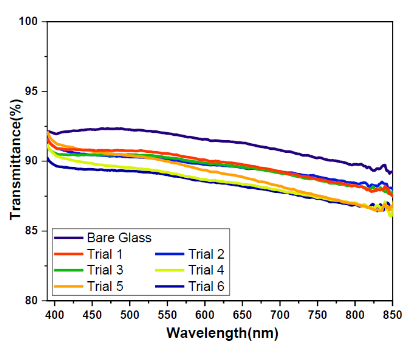
(Left) Water Contact Angle Variation with Increasing Resin Concentration Across Different Trials (Right) UV-Vis Transmittance of the prepared coatings.